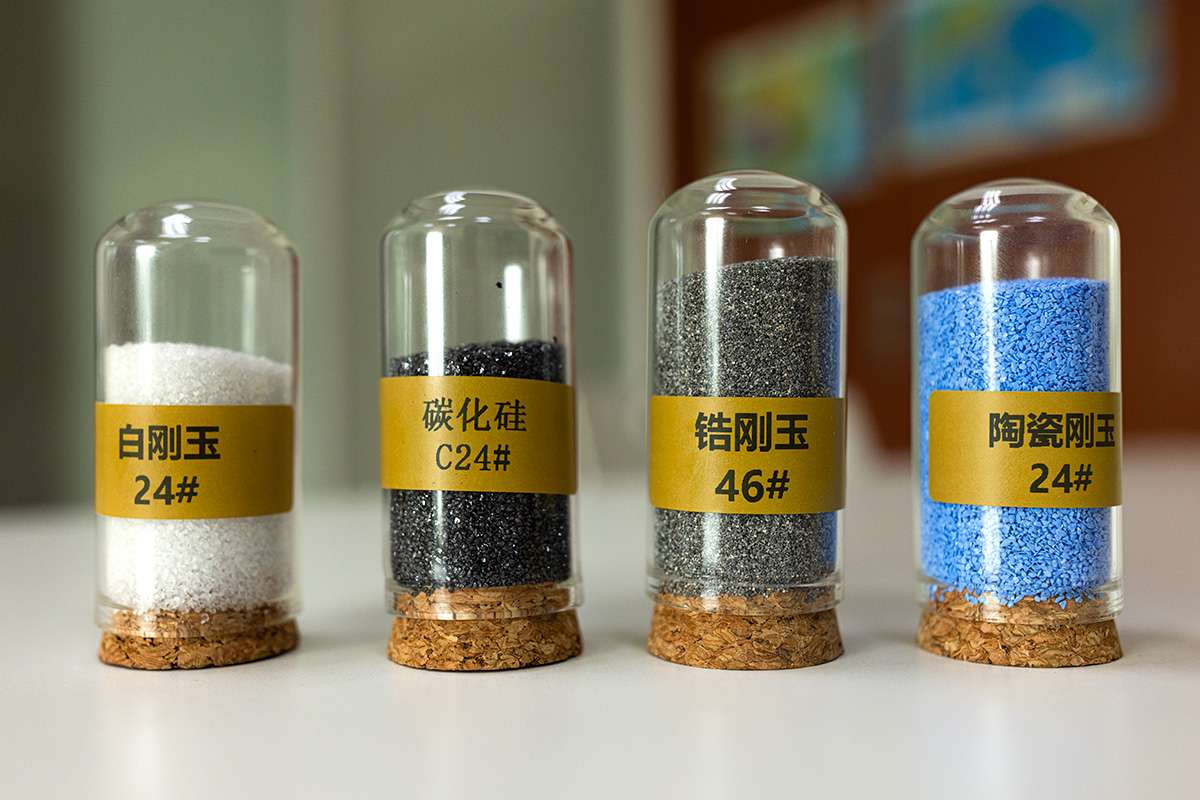
The right grinding wheel must be matched with the machine, material, removal target, and operating method. For you,the wrong choice may lead to delays, mistakes, and even shorten the lifespan of your tools. Today, I’ll help you distinguish between T1 and T27 grinding wheels.
Type 1 vs Type 27 at a Glance
There are two main types of grinding wheel, which you often use in your daily work: T1 Straight Grinding Wheel and T27 Depressed Center Grinding Wheel. Their shapes, equipment, and methods of use are all different.
| Comparison Item | T1 Straight Grinding Wheel | T27 Depressed Center Grinding Wheel |
| Structure | Flat shape with uniform thickness | Depressed center design with recessed hub |
| Working Surface | Uses the outer circumference only | Uses the outer edge and allows angled grinding |
| Equipment | Bench grinders, pedestal grinders, and grinding machines | Angle grinders and portable grinding tools |
| Operation Method | Workpiece is fixed and controlled by the machine | Operator controls the tool manually |
| Typical Applications | Tool sharpening, deburring, precision grinding, and surface finishing | Weld removal, beveling, chamfering, rust removal, and heavy grinding |
| Suitable Workpieces | Drill bits, cutting tools, shafts, rollers, and small components | Steel structures, pipes, automotive parts, and large metal fabrications |
| Grinding Stability | High stability and easy control | Depends more on operator skill |
| Grinding Precision | Higher precision and better surface consistency | Lower precision, mainly for rough grinding |
| Material Removal Rate | Moderate, suitable for controlled grinding | High, suitable for fast material removal |
| Flexibility | Limited due to fixed machine operation | High, suitable for on-site and large workpieces |
What Is a Type1 Grinding Wheel?
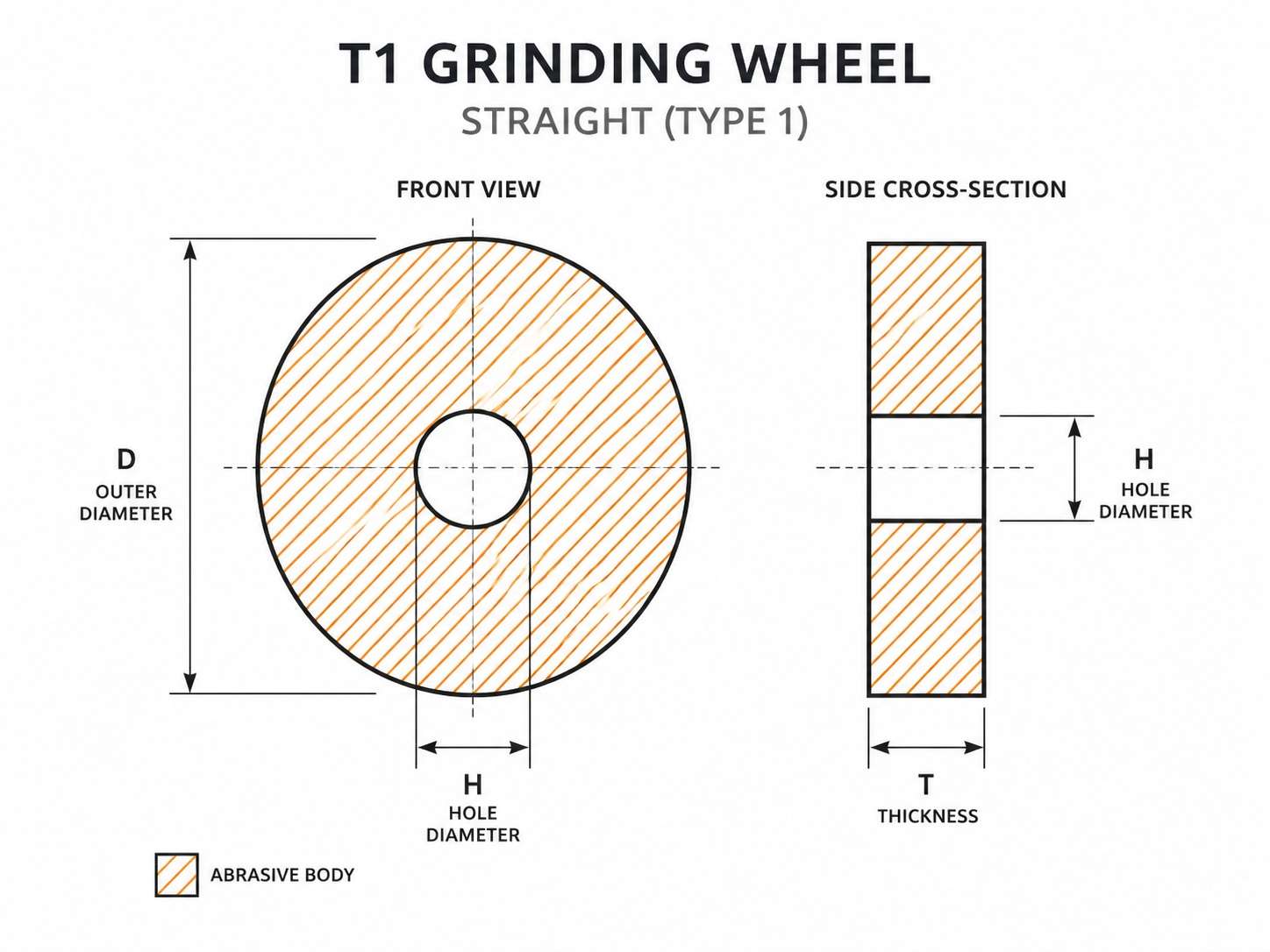
T1 Straight Grinding Wheel is the most common type of grinding wheel. OSHA 29 CFR 1910.211 defines Type 1 as a straight grinding wheel characterized by its diameter, thickness, and bore diameter, and explicitly. They require that it be used only on the outer circumference and clamped between flanges.
What Is a Type 27 Grinding Wheel ?
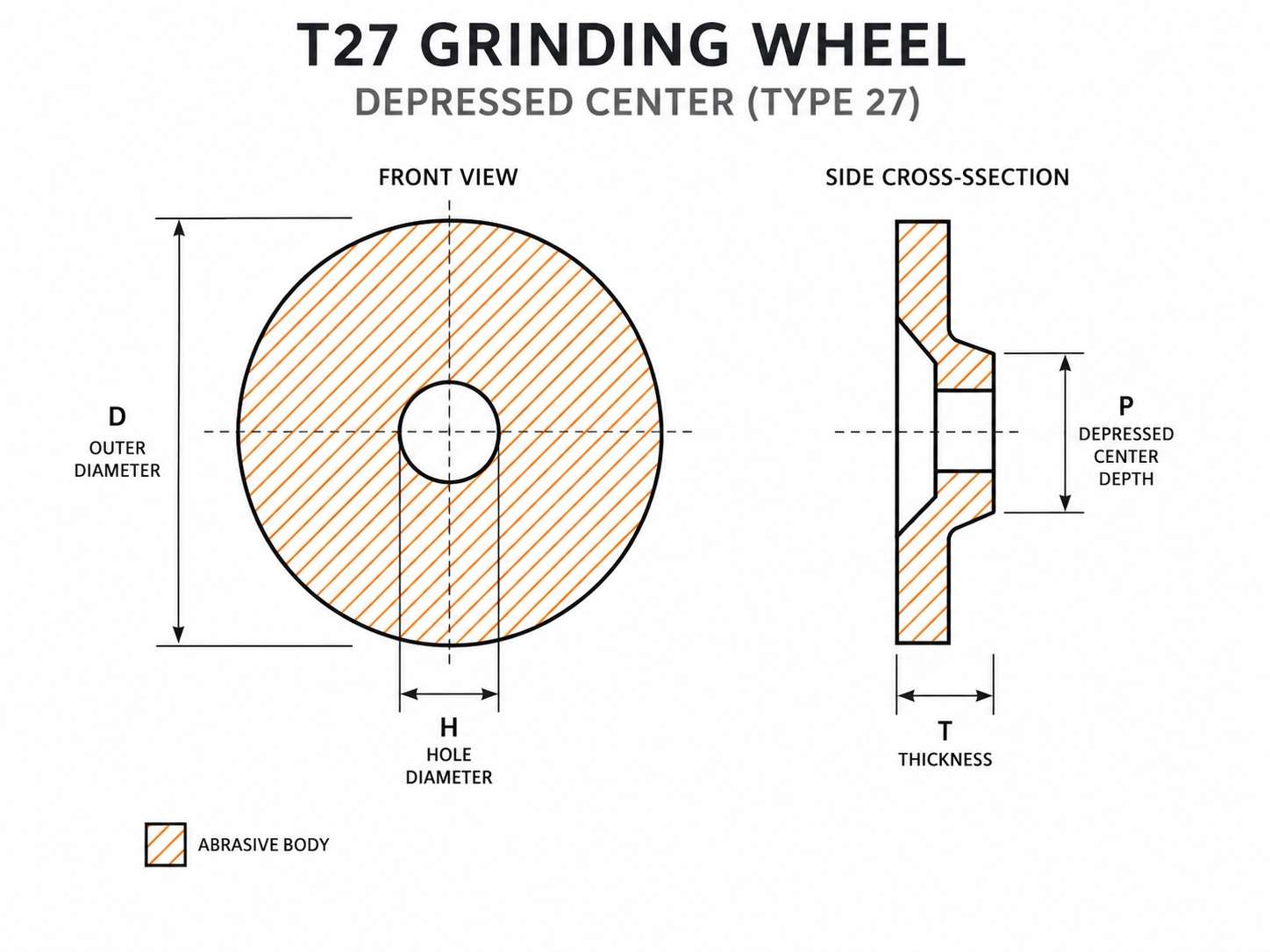
T27 Depressed Center Grinding Wheel is a type of grinding wheel with a concave structure , which is designed to install nuts and will not scratch the workpiece when grinding the surface flat.OSHA defines T27 as an enhanced bonded and offset-center grinding wheel, which structure allows for side and external cylindrical grinding.
Key Differences Between Type 1 and Type 27
Differences in Shape
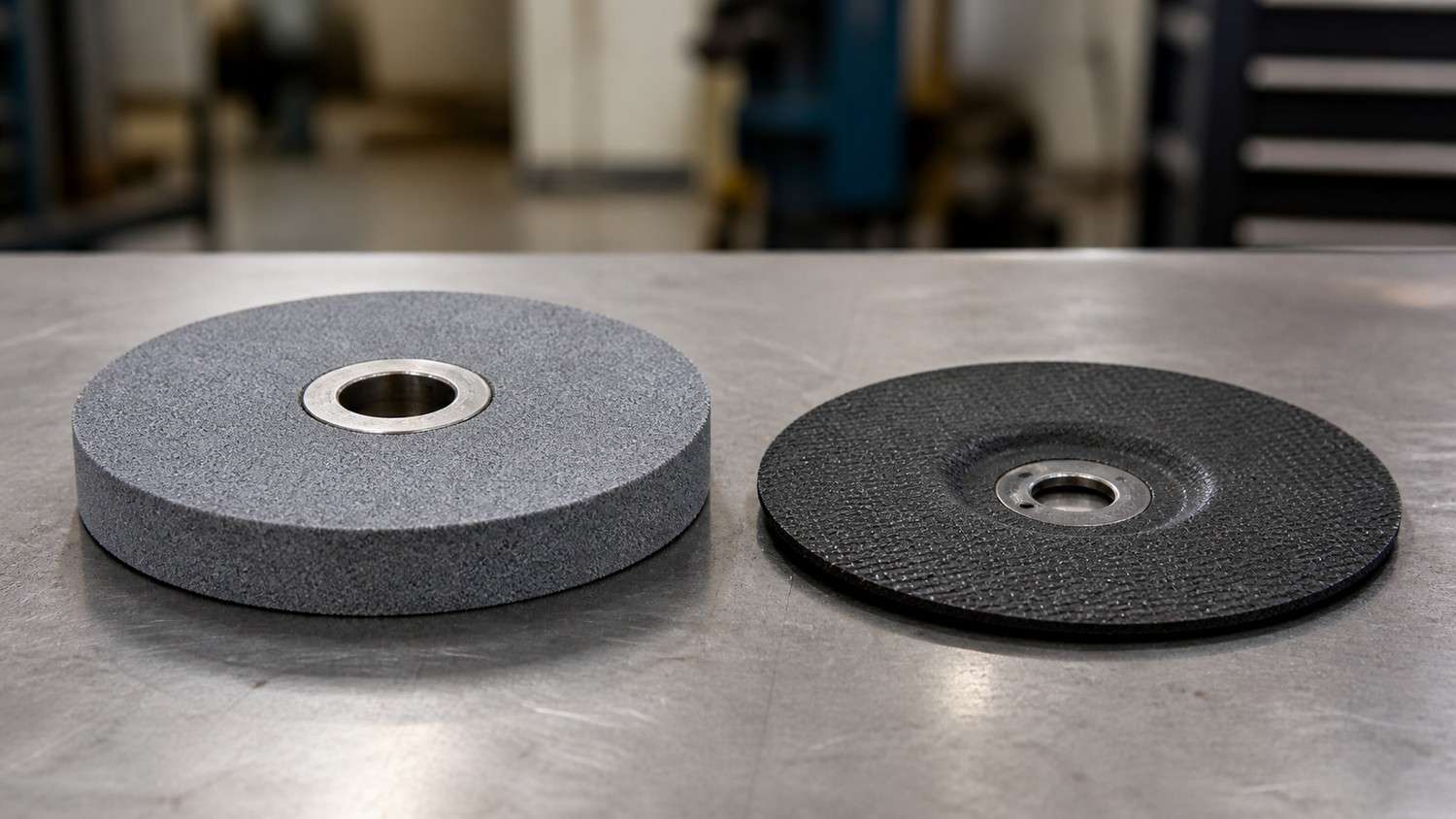
The T1 grinding wheel is a flat shape with uniform thickness.
The T27 grinding wheel has a depressed center design with recessed hub.
Differences in Operating Characteristics
- Type 1 Grinding Wheel Applications

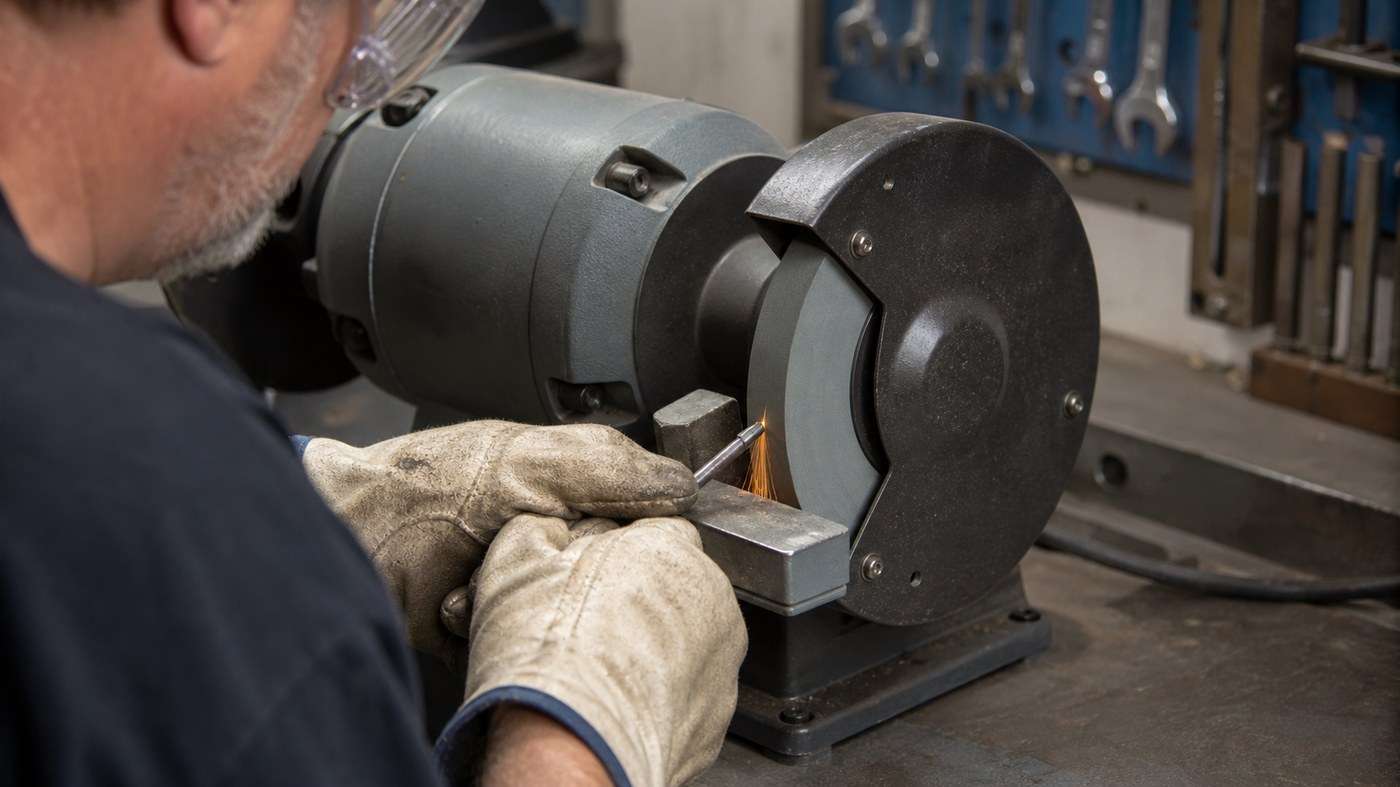
T1 grinding wheels are used on benchtop or floor-standing grinding machines, where workpieces can be safely placed on a support for control. This prioritizes stability, repeatability, and precision over portability. You can use it for deburring, trimming, and shaping parts, such as for sharpening drill bits, chisels, and other cutting tools.
The working effects achieved by using different grinding machines are as follows:
| Grinding Process | Surface Being Ground | Typical Workpieces |
| Cylindrical Grinding | External cylindrical surface | Shafts, pins, rollers |
| Surface Grinding | Flat surface | Mold plates, guideways, machine plates |
| Internal Grinding | Internal surface of a hole or bore | Bearing races, bushings, valve bores |
| Tool and Cutter Grinding | Cutting edges and geometric surfaces of tools | Drills, end mills, reamers, cutting tools |
- Type 27 Grinding Wheel Applications
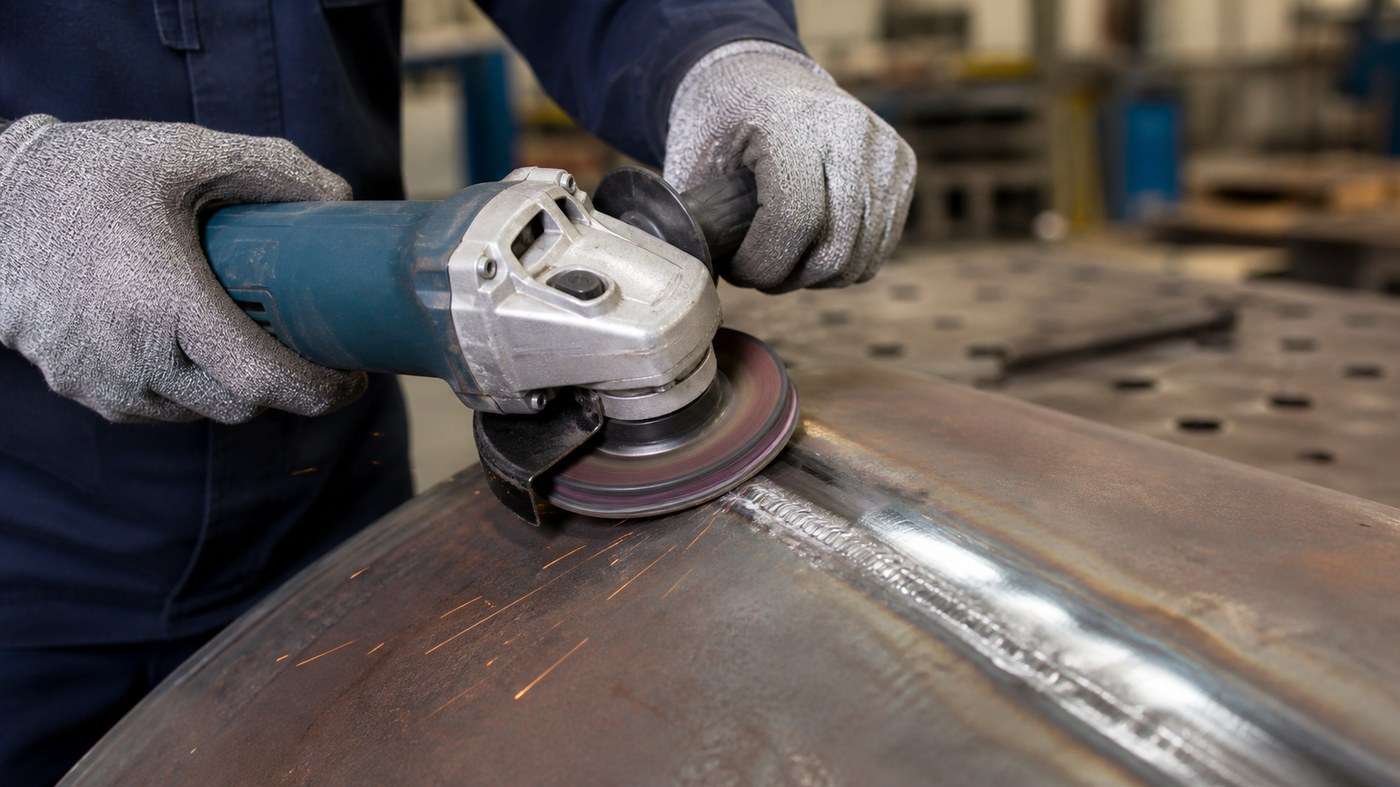
You can use an angle grinder with a T27 to smooth weld lines, burrs, and casting parting lines. For steel structures, pipes, automotive components, and other large or fixed workpieces, a portable Type 27 wheel may be more practical than moving the workpiece to a stationary grinder.
Or, if you need to quickly chamfer, bevel, or deburr, and are performing large-area rough grinding, as well as you value flexibility and removal speed; you can use a fiber disc or another suitable finishing abrasive after rough grinding when the required surface finish calls for it.
Differences in Characteristic
- Stability
The T1 wheel is commonly used on stationary grinding equipment. The fixed machine and supported workpiece make it easier to maintain a consistent grinding position and contact angle,thus ensuring stability.
The T27 wheel is typically used in handheld angle grinders. Their stability depends heavily on the operator’s grip, posture, pressure, and movements.
- Control
T1 grinding wheels make it easier to control a consistent grinding position, contact point, and feed direction, ensuring repeatability.
T27 grinding wheels are typically used in compatible angle grinders, offering better control over angles and directions for machining large or stationary workpieces.
- Uniform contact surface
T1 mainly uses the outer circumference to contact the workpiece, making it easier to control the contact position and obtain a uniform grinding surface.
T27 easily has an uneven surface. If you do not control the angle grinder at a proper angle, for example, angle is too large to exceed 35 degrees, the sharp edge of the grinding wheel will cut or gouge into the workpiece and leave pits that are difficult to repair.
- Grinding Precision
The fixed device usually gives better repeatability. Thus, Type 1 wheels can be used in controlled grinding operations, tool sharpening, and wherever there is need for close dimensional and surface tolerances.
In comparison, handheld devices have lower repeatability.
Type 27 wheels can be preferred for rough grinding, grinding away welds, beveling, and where access and fast removal are more important than precision.
- Flexibility
The T1 has a rigid working angle, and it is less convenient for large structures, installed components, field welds, and workpieces that are difficult to move.
T27 has a flexible working angle: it can switch between 15° and 30° at will. Its portable operation makes practical use for steel structures, pipes, large fabrications, on-site welds, and other fixed or difficult-to-access workpieces.
Differences in usage
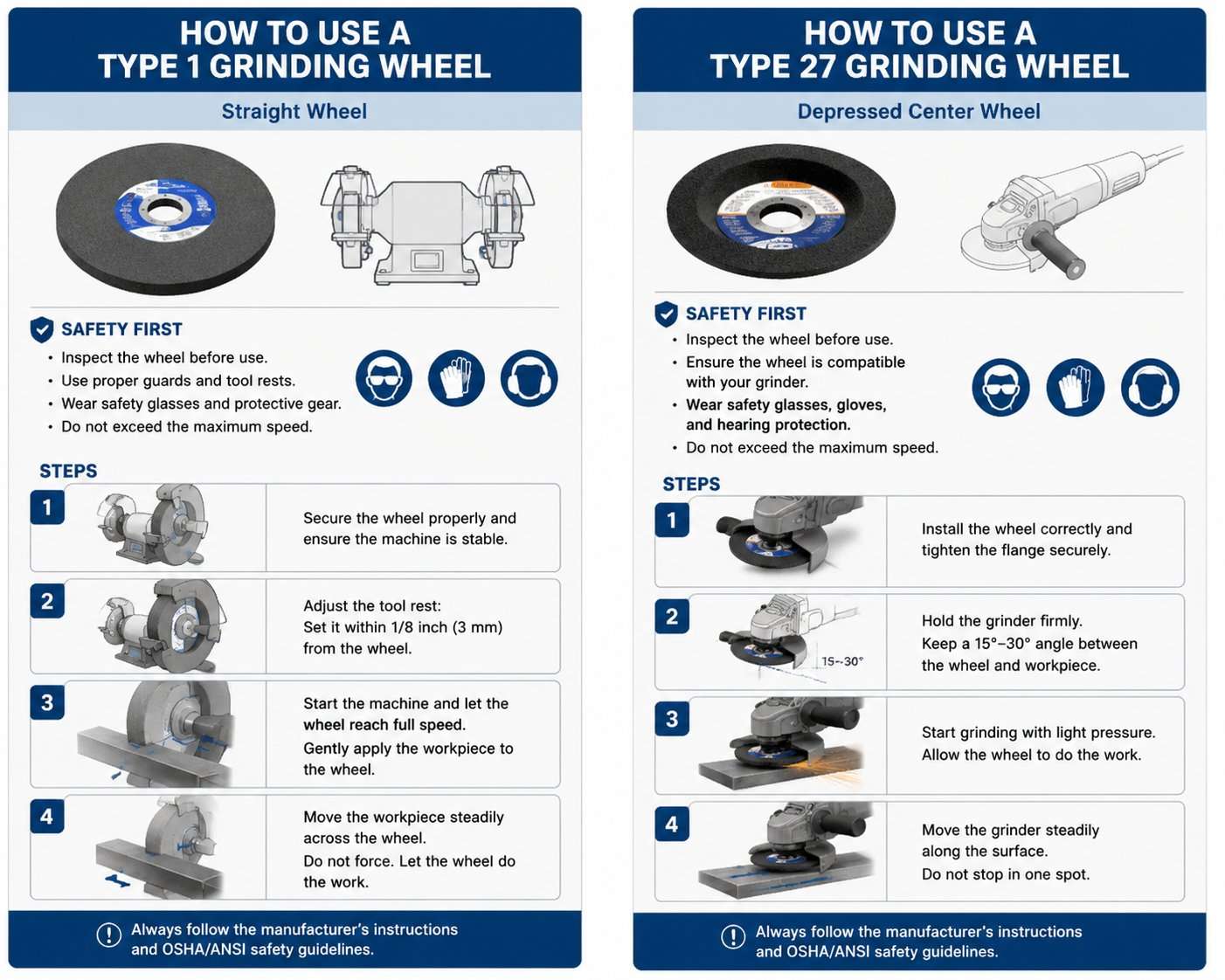
How to Use a Type 1 Grinding Wheel
Install
First, you must check whether the size, hole diameter, and speed match the machine, and the grinding wheel should be able to fit freely into the spindle. Do not force it in or enlarge the hole.
Wheel work rest clearance
For bench and pedestal grinders, the wheel work rest clearance should be adjusted as close as possible to the grinding wheel to minimize the risk of workpiece entrapment. OSHA specifies a maximum gap of 1/8 inch (3.175 mm) for the work rest and 1/4 inch (6.35 mm) for the adjustable tongue guard. Other regions follow similar regulations.
Operation and maintenance
You must work only on the outer circumference and keep the workpiece stable with gentle contact. Once your grinding wheel becomes dull, out of round, or develops grooves, you need to truing it with a suitable dressing tool,so that you can expose new abrasive grains for continued work.
How to Use a Type 27 Grinding Wheel
Standard angle
When grinding with a T27 wheel, imagine the workpiece surface as a tabletop, allowing the wheel’s working surface to contact the workpiece at a slight angle, rather than flat against it or nearly vertical. Cornell University’s Department of Environmental Health and Safety recommends that approximately 15°–30° is a common safety guideline.
Run the wheel itself first
When started, allow some time for the wheel to reach its required speed before touching the workpiece. This should be done by moving to and fro smoothly.
Suitable pressure
The tool should be kept stable in your hands while making smooth motions. Various abrasives and workpieces need varying amounts of pressure, so you cannot just follow the values stated for any one specific product.
Heat control
It would be best to work in steps, giving time for the workpiece to cool itself if necessary. This would help avoid the formation of blueing, distortion and also prevent metal filings coming into contact with the workpiece.
How to Choose Between T1 and T27 Grinding Wheel
Choose Type 1 Grinding Wheel If :
- You need high stability, precision, and consistent grinding results.
- You are using stationary grinding machines, such as bench grinders, pedestal grinders, or other fixed grinding equipment.
- You perform tool sharpening, deburring, tool maintenance, and precision grinding operations.
- You prioritize repeatability, surface quality, and controlled grinding performance over flexibility.
Choose Type 27 Grinding Wheel If:
- You need fast material removal and flexible grinding performance.
- You are using angle grinders or other portable grinding tools.
- You perform weld seam removal, beveling, chamfering, and heavy-duty grinding on large workpieces.
- You prioritize mobility, efficiency, and on-site grinding capability over maximum precision.
When you purchasing grinding wheels in bulk, a comprehensive consideration should be given to all the aspect. For example, the processing materials, grinding wheel consumption, surface finish, processing conditions, and operating methods.
FAQ
Can a T1 grinding wheel be used in multiple machines?
It’s important to understand that T1 is a wheel shape that can be applied to various grinding machines, but this does not mean that the same T1 wheel can be used between different machines. T1 wheels used in different processes may vary significantly in diameter, thickness, bore diameter, abrasive, bond, hardness, microstructure, precision, and rated speed.
Which grinding wheel type is better for metal fabrication, type 27 or type 1?
If your work mainly involves metal manufacturing, welding, steel structure processing, or grinding large workpieces. T27 Grinding Wheel is the preferred choice because it offers greater flexibility and material removal capabilities.
Which grinding wheel type is safer for general fabrication work?
Neither wheel type is inherently safer in every application. Use only a wheel approved for the machine, guard, flange, mounting system, and operating method, and never exceed the wheel’s maximum rated speed
Can you use a type 27 wheel on a tool designed for type 1?
This is not usually possible. Because of their different constructions, they are designed for different machines. Misusing them can lead to fatal problems.
How do type 27 grinding wheels compare in durability to type 1 wheels?
Wheel life cannot be ranked by Type 1 versus Type 27 shape alone. If comparing heavy-duty machining efficiency, the T27 is more durable because it is better suited for high load grinding. If comparing stable precision service life, the T1 may perform better because it wears more evenly.
Final Thoughts
Dome is a professional industrial grinding wheel supplier. We provide different types of grinding wheels with more than 25 years of experience. After reading my article, you should be able to make a purchasing choice. Explore our metal grinding discs or contact our team for specification support.
Safety References
OSHA 29 CFR 1910.211 – Definitions
OSHA 29 CFR 1910.215 – Abrasive Wheel Machinery
OSHA Checklist for Abrasive Wheel Equipment Grinders
Cornell EHS – Angle Grinder Toolbox Tal