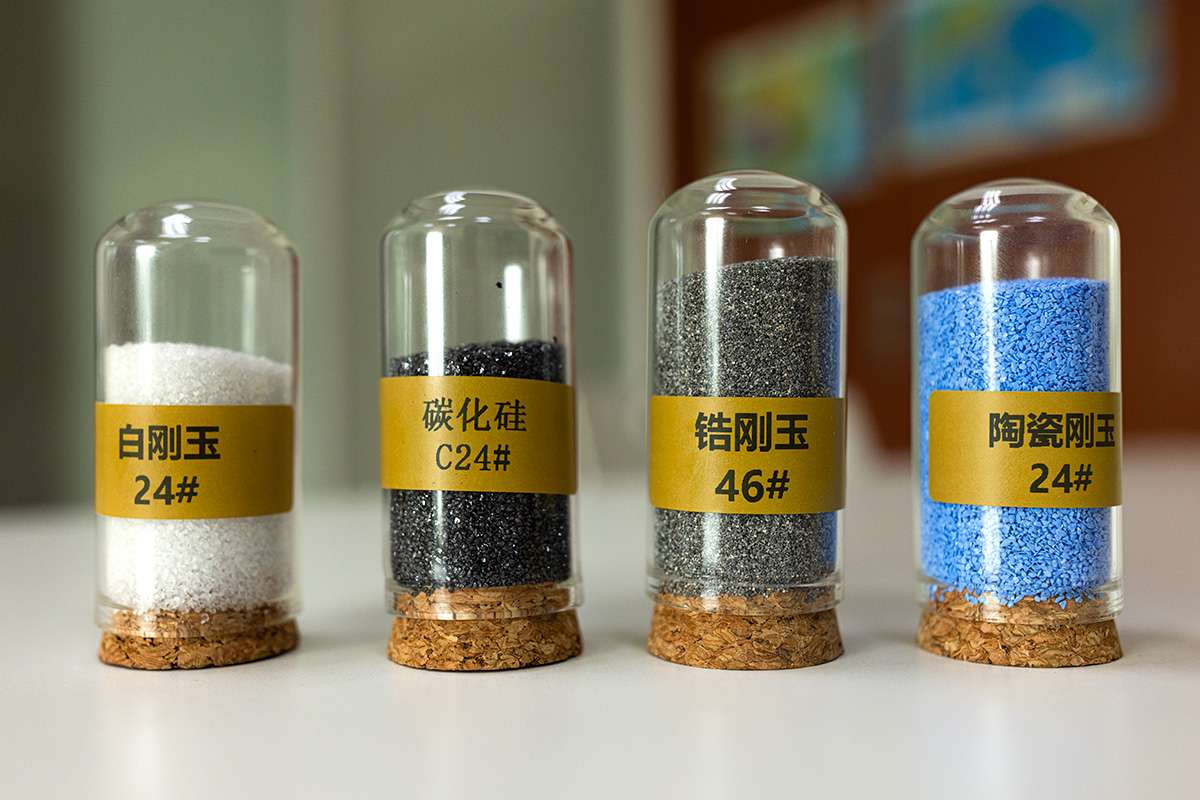
Uneven stainless steel finishes, burn marks, and excessive abrasive consumption are common challenges in metal fabrication. The wrong polishing process can lead to rework, product rejection, and production delays. I’m happy to offer you the following stainless steel polishing process.
Best Abrasive Wheels for Stainless Steel Finishing
In practical stainless steel fabrication, choosing the correct abrasive can significantly reduce grinding time and avoid excessive heat generation. Here is the simple chart of different uses of abrasive wheels for polishing stainless steel.
| Abrasive Wheel | Best Application | Recommended Material |
| Grinding Wheel | Remove welds and heavy defects | Zirconia Alumina |
| Flap Disc | Blend welds and surface preparation | Zirconia Alumina |
| Fiber Disc | Remove scratches and fine grinding | Aluminum Oxide/Zirconia |
| Non-woven Wheel | Brushed finish | Silicon Carbide/Aluminum Oxide |
| Buffing Wheel | Mirror finish | Cotton/Sisal |
4 Steps to Polish Stainless Steel
First, you need to check and clean the stainless steel surface first. Then, deal with welds and heavy surface defects. Third, smooth and buff the surface using abrasives. Finally, polish the stainless steel to achieve the desired finish.
Step 1: Inspect and Clean the Stainless Steel Surface
Inspect the Stainless Steel Surface Condition
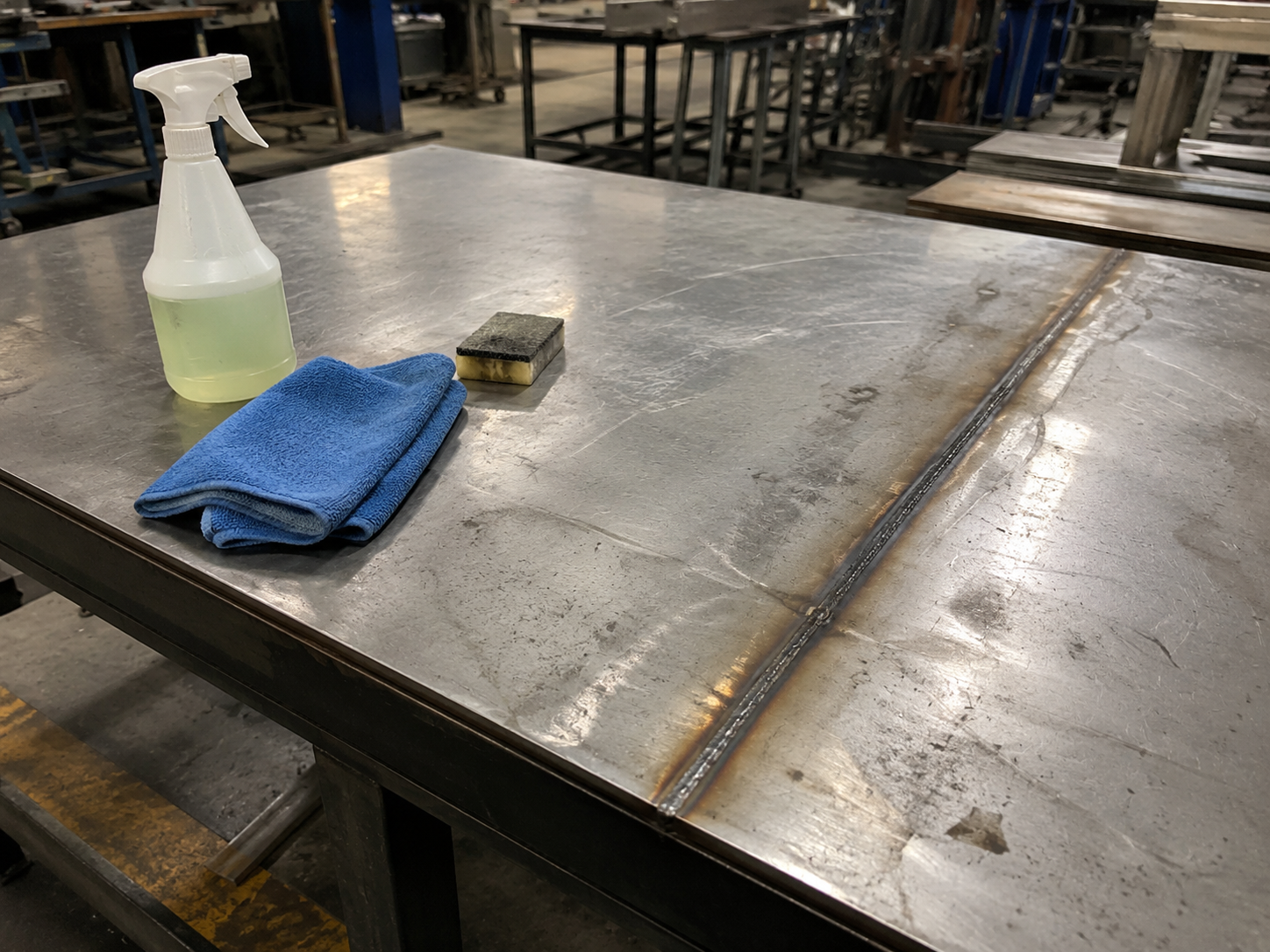 To prepare stainless steel for polishing, you should inspect the stainless steel first, so that you are able to know the overall problems and find the propor way to deal with it later.
Look for if there are any tiny scratches on the surface, which may have very small lines but are not deeply scratched. In this case , you can use fiber disc or fine flap disc to solve.When you notice that you can touch obvious grooves, which affect the appearance.We recommend: 60-80 grit grinding wheels. When you see the weld seam and welded area are raised, and the surface is uneven,you can choose the grinding wheel or flap wheel.
Clean the Stainless Steel
Be sure to thoroughly clean the surface with warm water, dish soap, and a brush or sponge to ensure it is clean. Use a mild detergent, but you cannot use steel wool, which will scratch its surface. Make sure there are no residues and then dry it with a towel.
Step 2: Grinding Stainless Steel
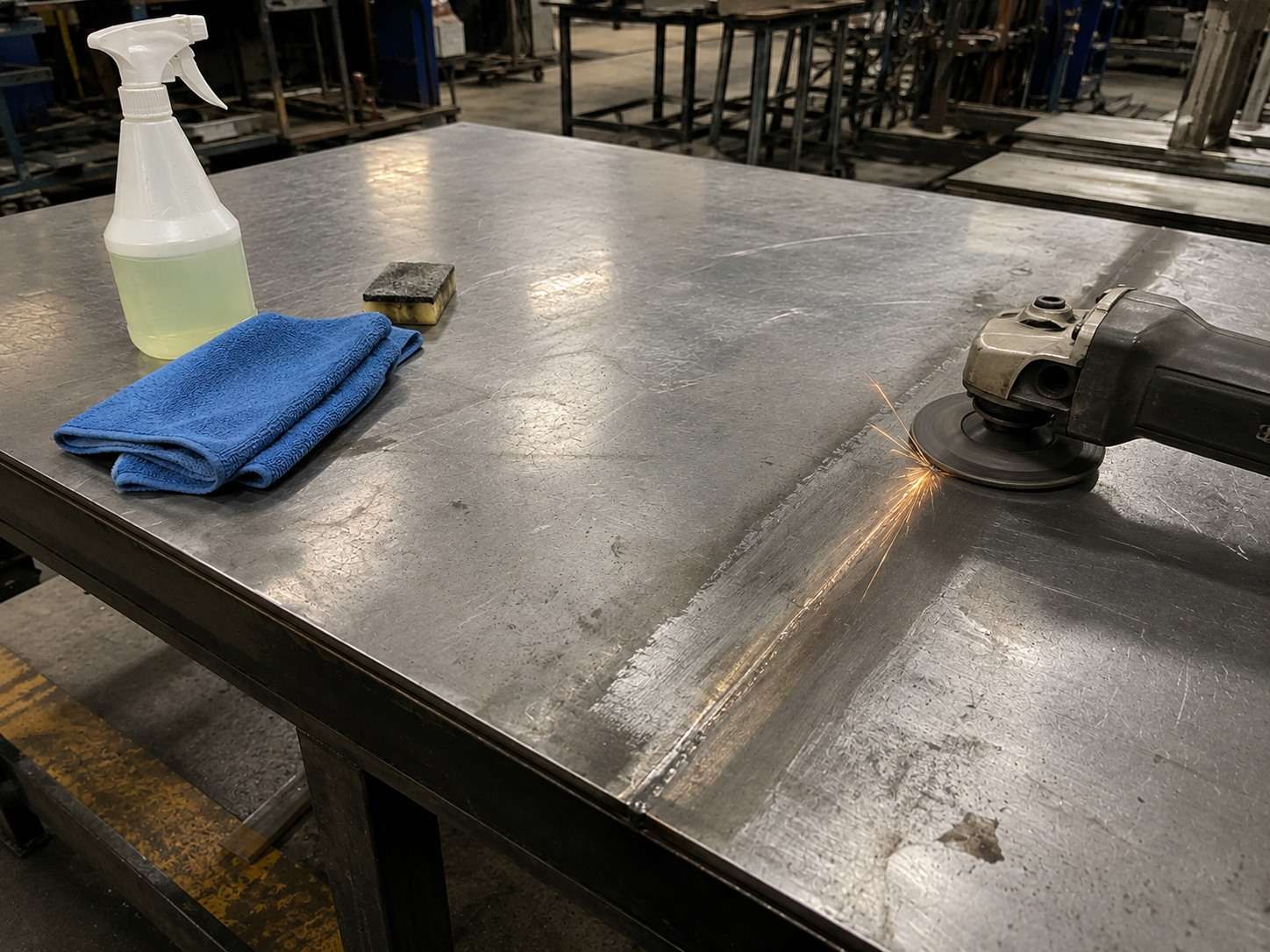
In order to remove raised welds, smooth out uneven areas, and remove heavy oxide layers, you are able to use a grinding wheel for stainless steel ,which removes material rapidly. In a practical grinding test, a zirconia alumina grinding wheel was used on 304 stainless steel welds with a 125×6×22.23mm angle grinder wheel. The test demonstrated its ability to remove weld material efficiently while maintaining good wheel life and surface control.
Subsequently,it is advisable to use flap discs to blend grinding marks.40-60 grit zirconia flap disc is advisable.
Step 3 :Buffing Stainless Steel
What is buffing
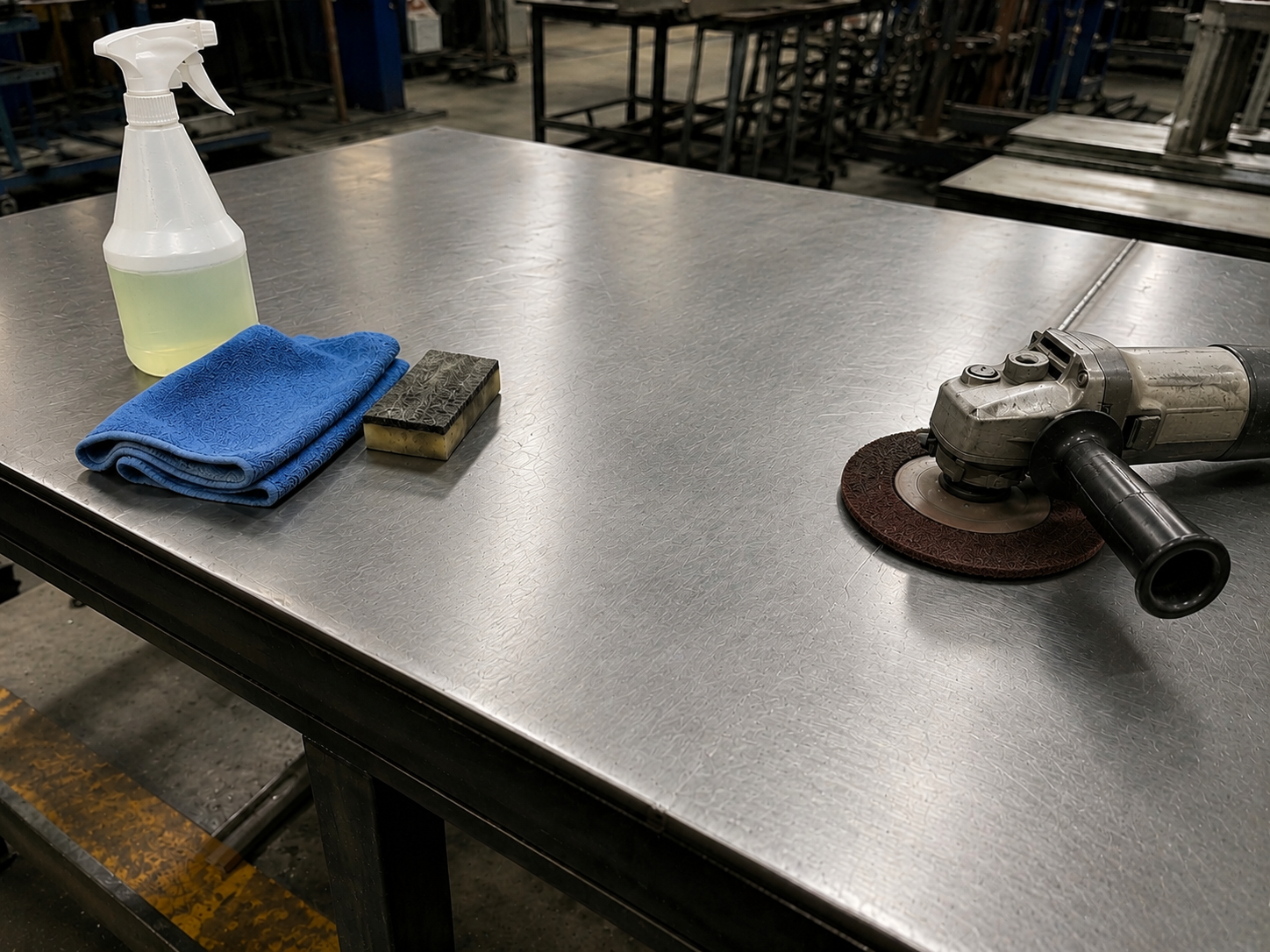
Buffing is a fine surface-finishing process used to remove fine scratches and surface imperfections with fine abrasives. This step, you are refining and smoothing the surface before final polishing.
How to Buff Stainless Steel
When buffing stainless steel, the surface should be gradually refined using finer abrasives. Start with 180-240 grit to remove surface imperfections, then progress through 400 and 600 grit to eliminate previous sanding marks. For mirror finishing applications, continue with 800-1200 grit abrasives to create a smooth surface ready for buffing.
A fiber disc, fine sanding disc, non-woven abrasive or any other suitable fine abrasive can be used on the finish. Move the abrasive evenly across the surface and make sure each finer grit removes the scratches left by the previous grit. Continue the manipulation until the surface is smooth and free of obvious sanding marks. At this stage, the goal is surface refinement rather than creating the final shine.
Step 4: Polishing Stainless Steel
what is polishing
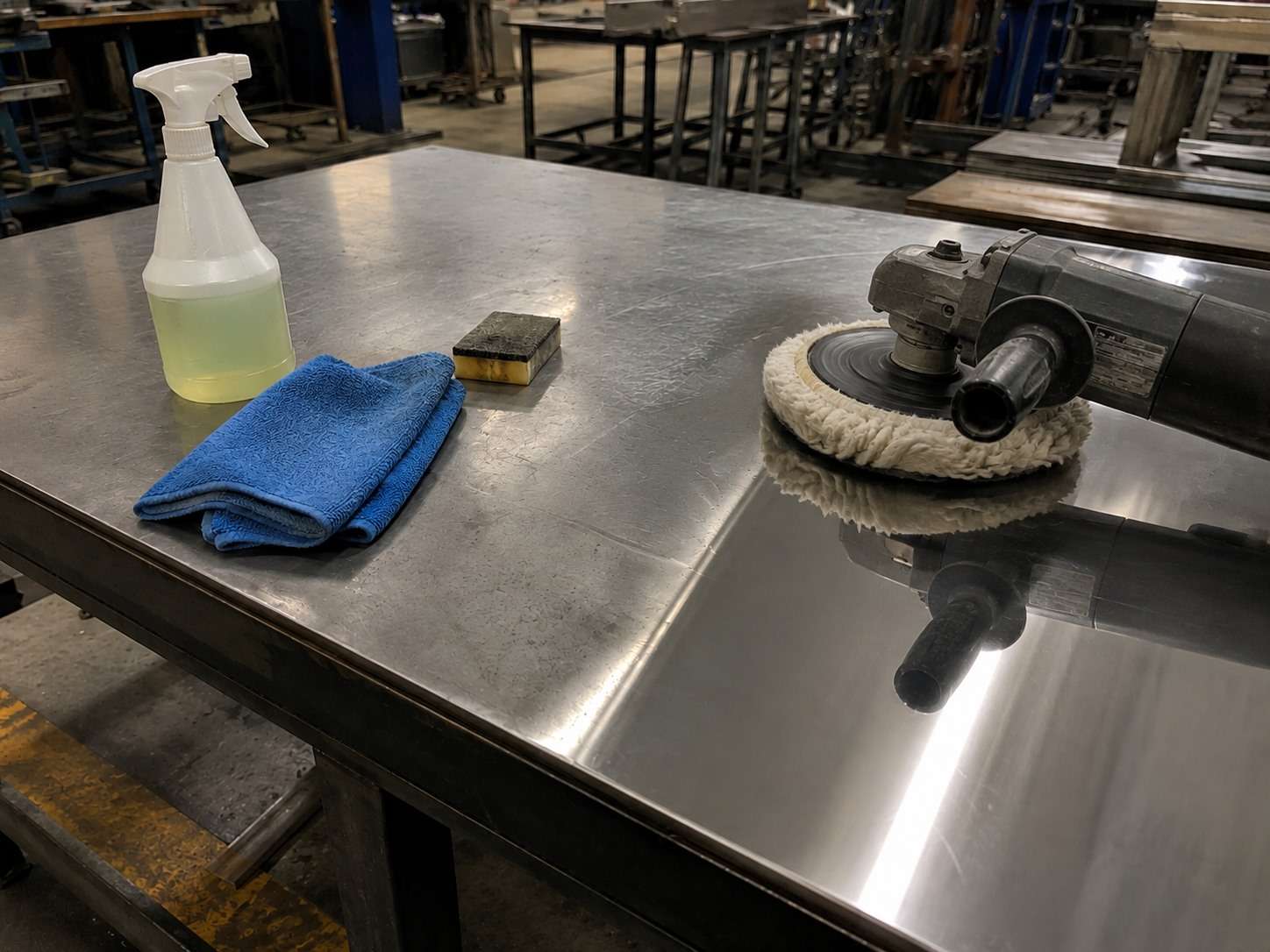
Polishing is the final surface-finishing process used to enhance surface brightness and reflectivity, typically using a polishing wheel or pad with a fine polishing compound to produce a high-gloss or mirror-like finish.
How to Polish Stainless Steel
When the stainless steel surface has been completely polished through the buffing process, polishing is applied to achieve the finishing shine. The surface needs to be cleaned first, after which a soft polishing wheel or polishing pad with the right fine polish that is meant for stainless steel should be used.
Apply the polish on the surface using the polishing wheel with light pressure and evenly. It should be noted that this process is not for removing scratches but for increasing brightness and making the surface very shin
Three Common Stainless Steel Finishes
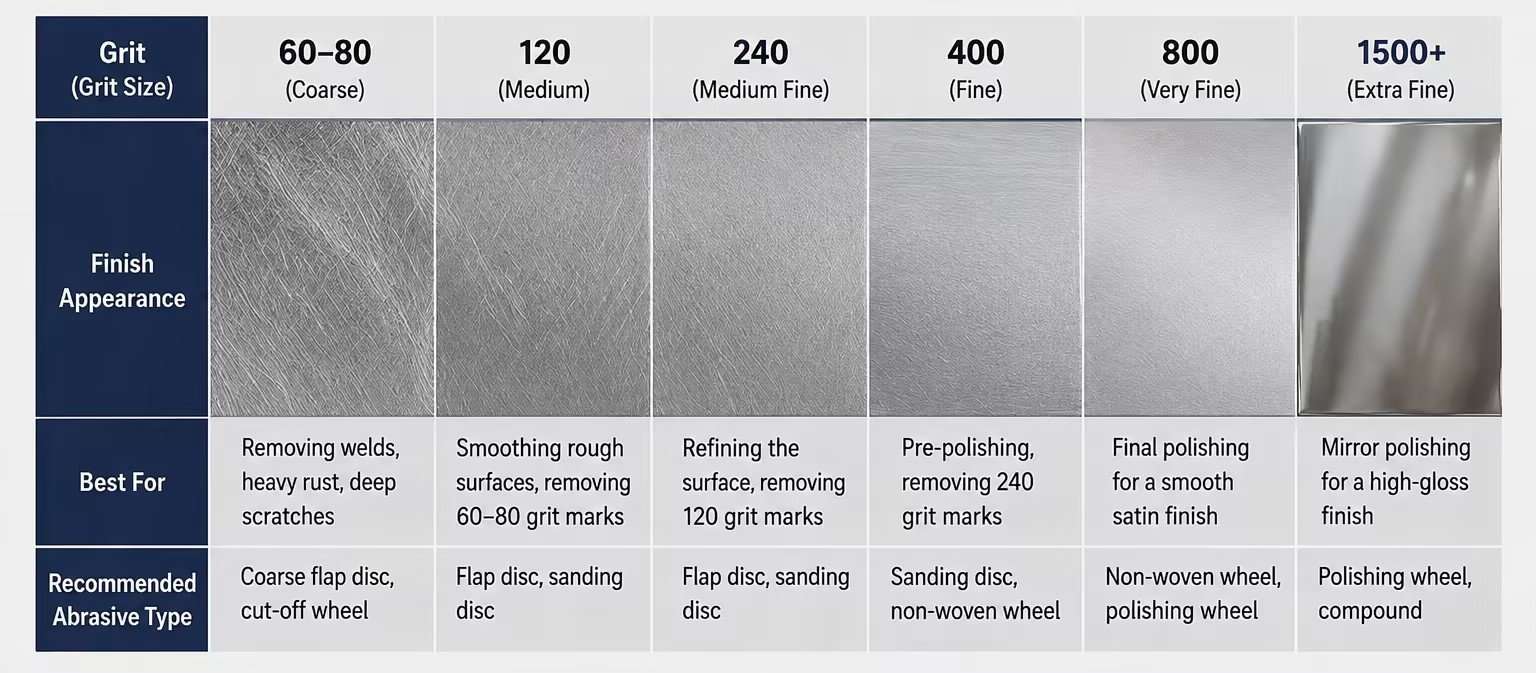
You should select grain size for stainless steel surfaces to achieve the desired polishing effect. The grit of 240-400 is generally used for the satin or brush finish, whereas mirror finish will need more abrasion through fine grits of 800-1200 to apply polish.
- Satin finish: A dull effect that works best in reducing reflections and fingerprints. This is accomplished by the use of a rough abrasive pad and applying some pressure.
- Mirror finish: A very reflective and shiny effect. This is done through the use of abrasives and polishing compounds, which are applied successively in order of increasing fineness.
- Brushed finish: An effect whose surface shows a linear texture. This is accomplished by use of a polishing pad in the shape of a brush and polishing in one direction.
How to Get Satin Finish Stainless Steel
Start with a clean, smooth surface and choose a fine-grit abrasive. A matte finish is usually achieved with just one or two rounds of polishing, such as first polishing with 240 grit sandpaper and then polishing with 300 or 400 grit sandpaper. The type of abrasive material to be used includes the abrasive belt, sanding disc, or the non-woven abrasive wheel.
The movement should always be in one direction to develop consistent grain lines that run parallel to each other. To achieve a smoother and uniform satin finish, the final step is to polish using the non-woven abrasive wheel.
How to Get Mirror Finish Stainless Steel
Polishing stainless steel generally has two steps. The first step is carried out using a coarse polishing compound in a sisal wheel, which serves to remove small machining marks from the surface. The second step is carried out using a fine polishing compound in a cotton wheel, which improves the bright look of the surface. During the entire process, one should ensure uniform pressure application and steady speed to prevent heating of the surface due to high pressure and uneven movement.
How to Get Brushed Finish Stainless Steel
Sand the abrasive in one continuous motion on the stainless steel so that the grain lines created will be straight and parallel. Keep a constant pressure and an even pace in order not to get inconsistent marks and overlapping patterns. It is important not to change the direction of sanding while working since this may affect the appearance of the brushed surface and make it uneven. To make it more uniform, use the non-woven abrasive pad or wheel in the same grain line.
What Grit Should You Use to Polish Stainless Steel?
Maybe you will be confused about what stainless steel polishing grit you should choose. The smaller the number, the coarser the particles; the larger the number, the finer the particles.Larger numbers are suitable for precision polishing.
| Stainless Steel Condition | Recommended Starting Grit | Purpose |
| Heavy welds | 36–40 | Heavy grinding |
| Deep scratches | 60 | Scratch removal |
| General surface blending | 80 | Blending |
| Preparing for finishing | 120 | Fine grinding |
| Buffing | 180–400 grit | Surface refinement |
| Polishing | Polishing Compound (No fixed grit) | Remove microscopic imperfections and achieve a high-gloss or mirror finish |
Common Stainless Steel Finishing Mistakes
- Keep on buffing one spot for too long during processing
- Polishing before removing deep scratches or weld marks
- Using the wrong grit size
- Skipping intermediate steps
- Using contaminated abrasives on stainless steel
- Ignoring the maximum RPM marked on the abrasive wheel
- Applying excessive pressure and overheating the workpiece
How to Choose a Stainless Steel Abrasive Wheel Supplier
- Product Range:
An excellent supplier must have a wide variety of product types. It can meet customer needs and provide timely supply.
- OEM Capability
Choosing a manufacturer that can provide OEM services will solve your promotional needs. You can choose the one that provides customized sizes, packaging, and private labeling.
- Quality Control
Quality is the guarantee of safety. For example, MPA, EN12413, IOS9001 and BSCI certification are essential.
- Export Experience
Whether the abrasive wheel supplier has experience is one of the criteria for trustworthiness.
FAQ
Why should you remove heavy surface defects first?
In stainless steel processing, welded areas and severe surface defects are often the main factors affecting the final polishing effect. Directly performing buffing or polishing not only fails to eliminate these problems but may also lead to uneven surface gloss and more noticeable defects.
Therefore, before proceeding buffing and polishing, it is necessary to remove excess material through grinding and blending to restore a smooth stainless steel surface.
What Is the Difference Between Buffing and Polishing?
Buffing is primarily used to eliminate minor scratches, smooth surfaces, and enhance metallic shine. It is applied before final polishing.
Polishing is the final step, which used to increase brightness and achieve a mirror-like finish
What Compound Should You Use on Scratched Stainless Steel?
If there are scratches on it, the first step is to use cutting pastes to remove small scratches and machining marks. Then finishing pastes can be applied to increase the brightness of the surface and get a glossy finish. Normally, sisal wheels are used together with the cutting paste, and after that, cotton wheels are used with finishing pastes.
Can You Use the Same Wheel for Different Compounds
No. Use a separate wheel for each compound. Mixing coarse and fine compounds can contaminate the finishing wheel and leave new scratches on the surface.
How Can You Prevent Overheating?
Apply moderate pressure and move the tool continuously while operating at speeds specified by the abrasive supplier. High temperatures may discolour the stainless steel and decrease abrasive life.
Final Thought
If you have the demand of polishing stainless steel, I believe this article will inspire and provide you with some tips. If you want to purchase suitable polishing wheels and tools, please contact Dome immediately. We will provide you with personalized advice and selection assistance!