
Abrasive grains play a critical role in determining the performance of abrasive wheels. Selecting the wrong grain type will reduce cutting and grinding efficiency, shorten wheel life, and generate excessive heat in the workpiece. These issues may increase operating costs, the risks of inventory, and create inconsistencies of product performance. Finally, this leads to customer complaints. In this article, we will introduce the main types of abrasive grains and their suitable applications.
Main Types of Abrasive Grains
The abrasive grains commonly used in the manufacture of cutting discs & grinding wheels mainly include aluminium oxide, silicon carbide, zirconia alumina, ceramic alumina. They have their own unique characteristics. The specific choice will depend on your intended application.
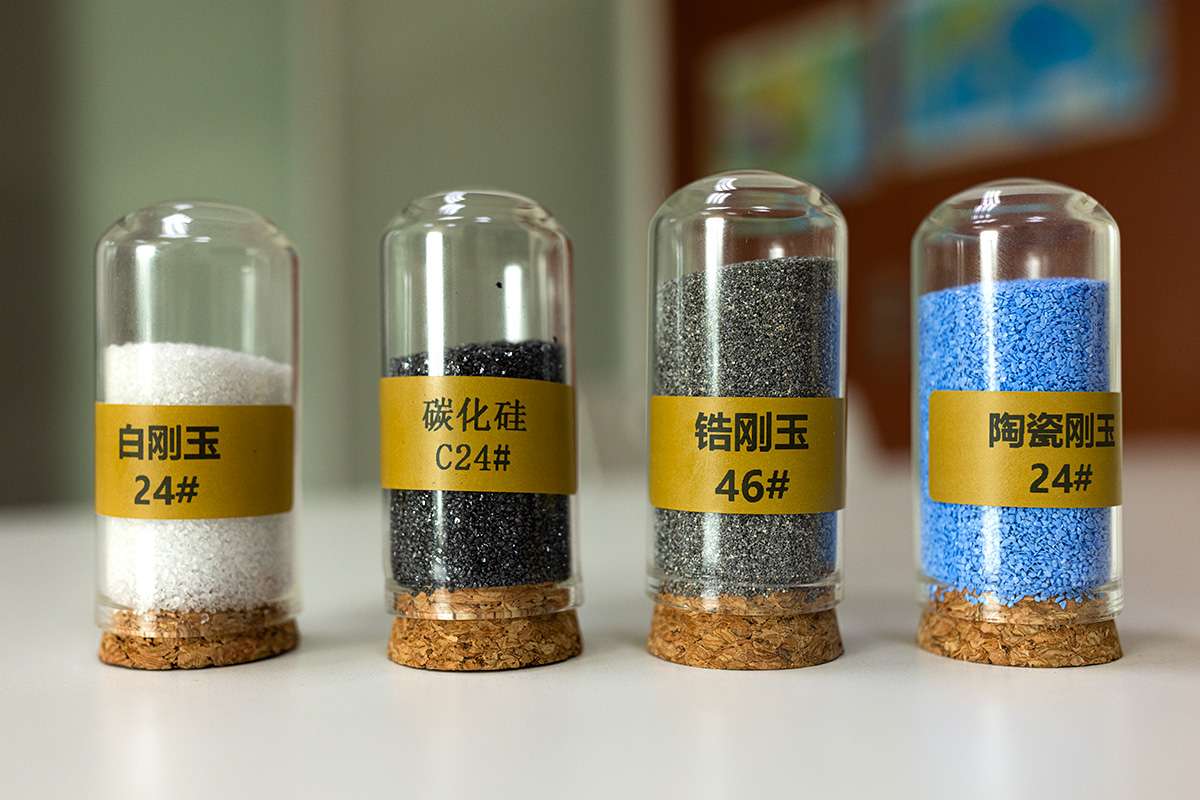
1. Aluminium Oxide (Aluminum Oxide) Abrasive Grain
What is Aluminium Oxide Abrasive Grain
Aluminium oxide (Al₂O₃) is one of the most widely used abrasive grains of industrial grinding, cutting and polishing. Aluminium oxide is a synthetic abrasive produced through high-temperature melting, crystallisation and crushing. Because it offers a good balance of hardness, toughness and cost, it is a highly versatile abrasive material can be used in metal grinding wheels, metal cutting discs, sanding belts, sandpaper, sandblasting abrasives and precision grinding products.
Industrial-grade aluminium oxide abrasive grains typically include: 1. brown corundum 2. white corundum 3. chromium corundum 4. monocrystalline aluminium oxide.
When selecting aluminium oxide, it is not simply a case of ‘the harder, the better’; rather, you need to take into account a range of factors, including the workpiece material, cutting efficiency, surface quality, abrasive life, machining method and cost objectives.
The Advantages of Aluminium Oxide Abrasive Grain
- Balance
Aluminium oxide has a Mohs hardness of 9. It offers the perfect balance between hardness and toughness.
Aluminium Oxide vs Silicon Carbide Abrasive
| Abrasive Grain | Hardness | Toughness |
| Oxide Abrasives | High | High |
| Silicon Carbide | Higher | lower |
- Thermal Stability
The melting point of aluminium oxide is approximately 2050 °C. It is therefore suitable for heavy-duty applications involving high-speed grinding.
- Competitive Prices
The unit price of aluminium oxide abrasive grain is generally moderate: it is more expensive than garnet, but cheaper than silicon carbide, high-performance zirconia-corundum and ceramic aluminium oxide.
- Wide range of particle sizes
The particle size range of aluminium oxide abrasive grain extends from approximately 4.75 millimetres to 1 micrometre.
Limitations of Aluminium Oxide Abrasive Grain
- Loading or clogging may occur when grinding soft, ductile or low-melting-point non-ferrous metals.
- In high-performance grinding, the cutting speed of standard aluminium oxide may be lower than that of ceramic aluminium oxide
Optimal Materials and Applications
The key advantages of aluminium oxide abrasive grain are its good balance of hardness and toughness, wide range of applications and moderate cost. Therefore, it is best suited to machining carbon steel and ordinary steel. Although aluminium oxide can also be used on wood and other metals, it performs particularly well on carbon steels and general-purpose steels.
Available Subtypes
Aluminium oxide abrasive grain mainly includes brown corundum, white corundum, chromium corundum and monocrystalline alumina. The Al₂O₃ content varies for each grain, and their features and prices also differ.
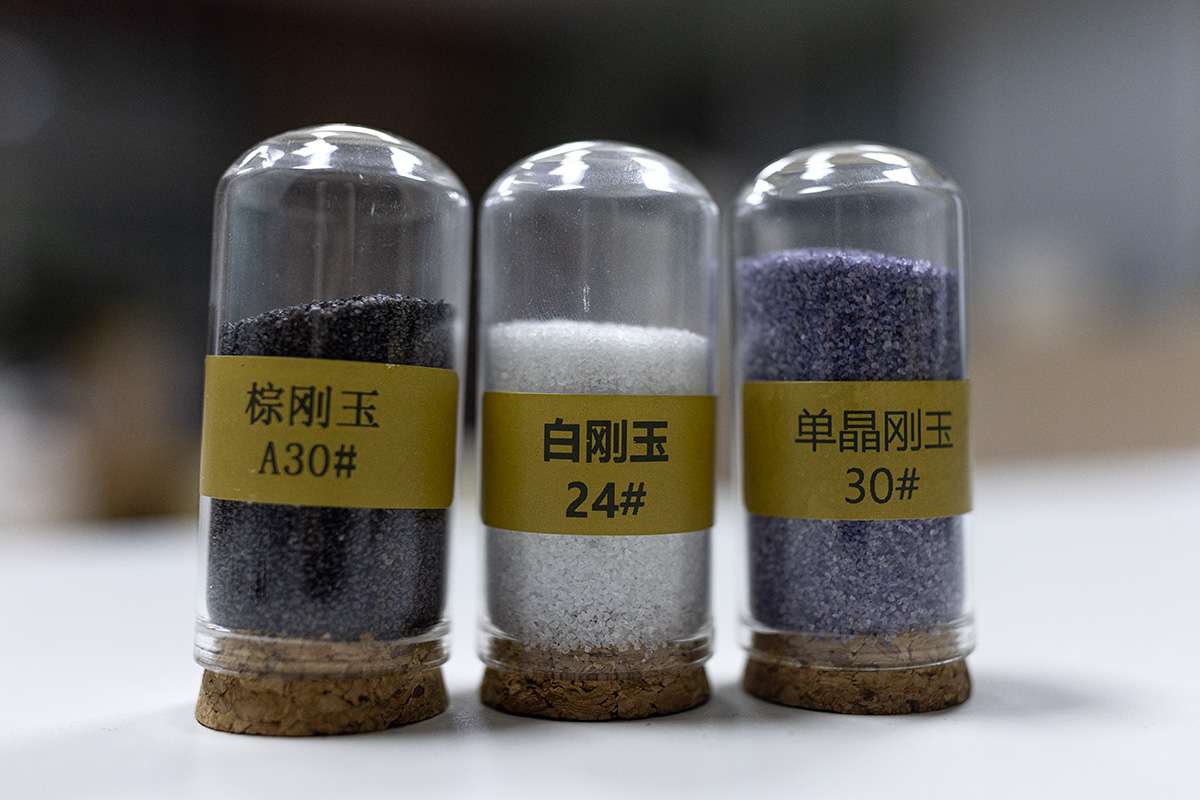
(1) Brown Fused Alumina (BFA)
Brown fused alumina contains 95% Al₂O₃ and 2–4% TiO₂. It generally offers the highest toughness and the lowest cost among the four subtypes. It is suitable for withstanding high impact forces.
(2) White Fused Alumina (WFA)
White fused alumina typically contains more than 99% Al₂O₃. Compared to brown corundum, it offers superior self-sharpening properties and cutting sharpness, helping reduce the risk of grinding burns. It is suitable for clean blasting, precision grinding, lapping and polishing applications, and may be used for stainless steel, medical devices and aerospace components.
(3) Chromium corundum
0.5-3% Cr₂O₃ is added to a base of white corundum, giving the abrasive grains a pink colour. Its toughness is generally slightly higher than that of ordinary white corundum.
(4) Monocrystalline Alumina
Single-crystal aluminium oxide is produced by adding pyrite to brown aluminium oxide, giving it superior grinding performance. If you wish to machine iron-based materials that are relatively hard, strong and difficult to grind—such as stainless steel and high-vanadium high-speed steel—single-crystal aluminium oxide is an excellent choice.
| Abrasive Grain | Key Characteristics | Best For | Typical Applications
| Relative Cost |
| Brown Fused Alumina | Tough, durable and cost-effective | Carbon steel, cast iron and general-purpose metals | Sandblasting, rust removal, surface preparation, grinding wheels and coated abrasives | Low |
| White Fused Alumina | High purity, sharp cutting and good self-sharpening ability | Stainless steel, aluminium, hardened steel and precision components | Clean blasting, precision grinding, lapping and polishing | Medium |
| Chromium corundum
| Sharper than brown alumina and tougher than white alumina | Tool steel, alloy steel and hardened steel | Precision grinding, tool sharpening and profile grinding | Medium to High |
| Monocrystalline Alumina | Strong cutting edges, controlled micro-fracturing and long service life | Hardened steel, high-speed steel, bearing steel and high-strength alloys | High-performance grinding, cutting wheels and precision bonded abrasives | High |
In conclusion, brown corundum is a relatively common choice and is also relatively inexpensive. White corundum and chromium corundum are more suitable for precision machining. On the other hand, Single-crystal aluminium oxide is used for heavy-duty machining. It should be noted that the cost of each material is not fixed; the above description merely reflects general trends. For example, the price of white aluminium oxide closely follows the market price of alumina; whilst the electricity consumption for smelting brown aluminium oxide is approximately 40% to 50% higher than that for white aluminium oxide, and due to fluctuations in the prices of bauxite and coal, the market price of brown aluminium oxide may at times even exceed that of white aluminium oxide for a limited period.
2. Silicon Carbide Abrasive Grain
What is Silicon Carbide Abrasive Grain
Silicon Carbide (SiC) is a synthetic abrasive made from carbon and silicon
Features
Silicon carbide has a Mohs hardness of approximately 9 to 9.25 and a true density of approximately 3.21 g/cm³. It begins to decompose at around 2300 °C.
(1).Compared with aluminium oxide, silicon carbide is harder and sharper but also more brittle. Because of self-sharpening properties. Silicon carbide can continuously expose new cutting edges under grinding pressure, thereby maintaining grinding efficiency.
(2) It has relatively high thermal conductivity, which helps to dissipate heat from the cutting zone.
(3) Silicon carbide also offers good chemical stability in many grinding and blasting environments.
Limitations
Rapid Wear Under Heavy Loads
Because of its high brittleness, silicon carbide may wear more rapidly under heavy grinding pressure. Particularly during heavy-duty grinding, the grinding wheel for angle grinder wears out extremely quickly, meaning that bulk grinding wheel wholesalers must take procurement costs into account
Optimal Materials and Applications
Due to its extreme hardness and brittleness, silicon carbide is suitable for non-metallic materials, such as stone, glass and ceramics. It is therefore widely used in the construction and machining sectors.
Available Subtypes
Silicon carbide is mainly classified into black silicon carbide and green silicon carbide.
- Black silicon carbide: General coarse grinding, sandblasting, and the machining of cast iron and non-ferrous metals
- Green silicon carbide: Cemented carbide, ceramics, glass and precision grinding
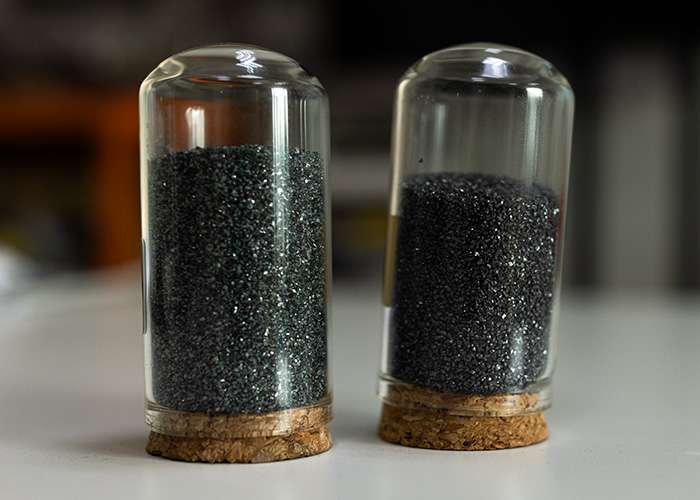
Black Silicon Carbide vs Green Silicon Carbide
| Comparison Item | Black Silicon Carbide | Green Silicon Carbide |
|---|---|---|
| English Name | Black Silicon Carbide | Green Silicon Carbide |
| Common Codes | C, 37C, etc. | GC, 39C, etc. |
| Color | Black or dark gray | Green |
| Product Positioning | General-purpose and economical | High-purity grade |
| Grain Characteristics | Sharp grains with relatively high strength | Higher purity, more brittle, and better self-sharpening |
| Cutting Performance | Suitable for general-purpose and relatively coarse machining | Suitable for precision machining and sharp cutting |
| Typical Materials | Cast iron, aluminum, copper, stone, rubber, and glass | Cemented carbide, ceramics, glass, and precision non-ferrous materials |
| Typical Applications | Grinding wheels, sandpaper, abrasive blasting, and stone processing | Precision grinding wheels, grinding, polishing, and pressure blasting |
| Relative Price | Relatively low | Relatively high |
3. Zirconia Alumina Abrasive Grain
What is Zirconia Alumina Abrasive Grain?
Zirconia alumina is a synthetic fused abrasive produced by synthesising zirconia and alumina at high temperatures. The fine crystalline microstructure of this abrasive combines hardness, toughness and self-sharpening properties.
Zirconia Content
It is worth noting that the proportion of zirconia in zirconia alumina varies considerably, which ultimately affects its toughness, crystal structure and fracture behaviour. Furthermore, a higher proportion is not necessarily better. When using zirconia alumina products, it is advisable to enquire about the zirconia content in order to maximise their potential.
Common Commercial Zirconia Alumina Categories
| Type | Zirconia (ZrO₂) Content | Alumina (Al₂O₃) Content | Key Features |
|---|---|---|---|
| Low-Zirconia Alumina (ZA10) | Approx. 10% ZrO₂ | Approx. 85–90% Al₂O₃ | Significantly improved toughness with relatively low cost |
| Medium-Zirconia Alumina (ZA25) | Approx. 25% ZrO₂ | Approx. 70–75% Al₂O₃ | Best overall performance and the most widely used grade in industrial applications |
| High-Zirconia Alumina (ZA40) | Approx. 40% ZrO₂ | Approx. 55–60% Al₂O₃ | Extremely high toughness, suitable for heavy-duty grinding |
Features
- High toughness
Zirconia alumina can withstand significant impact forces and is suitable for removing large amounts of material during heavy-duty grinding.
- Controlled Fracture and Self-Sharpening
The fracture behaviour, toughness and self-sharpening response can be adjusted by changing the zirconia content and microstructure.
- Long Service Life
Its high toughness and controlled micro-fracturing help extend abrasive life in medium- and high-pressure grinding applications.
Optimal Materials and Applications
It is worth noting that zirconia alumina requires sufficient grinding pressure to effectively trigger micro-fracturing of the abrasive grains and the formation of new cutting edges. It is therefore suitable for medium- to high-pressure grinding and high-power, heavy-duty applications. The core application of zirconia alumina is heavy-duty metal grinding, primarily involving carbon steel, stainless steel, high-alloy steel, high-nickel alloys and aluminium. Zirconia alumina grinding discs are used in metalworking and welding, stainless steel products, casting and forging, the automotive and transport sectors, as well as in aerospace and energy equipment.
4. Ceramic Aluminium Oxide Abrasive Grain
What is Ceramic Aluminium Oxide Abrasive Grain
It is composed primarily of high-purity aluminium oxide and is manufactured using sol-gel, seed-gel and sintering processes. Of all abrasives, ceramic abrasives offer the highest cutting efficiency and the longest service life among the four main grain types.
Features
- Ceramic abrasives possess a self-sharpening capability, whereby the abrasive grains continuously fracture into small cutting edges during the grinding process.
- The utilisation rate of individual ceramic abrasive grains is as high as 80 per cent, resulting in an exceptionally long service life for the abrasive tools.
- Because ceramic grains remove material efficiently, they can reduce rubbing and heat build-up at the workpiece, lowering the risk of thermal damage.
Limitations
- Ceramic abrasives are expensive
- Ceramic abrasives should not be subjected to excessive pressure, as this can cause the particles to fracture rapidly, thereby reducing efficiency and causing thermal damage.
- Ceramic abrasives are not suitable for all materials. When machining softer, highly ductile materials such as aluminium and copper, swarf tends to adhere to the tool and cause it to become clogged
Optimal Materials and Applications
Ceramic abrasives are primarily used for machining high-strength, high-hardness materials; they are particularly suitable for stainless steel, as well as hardened steel, tool steel, nickel-based superalloys and titanium alloys. They are used in sectors such as the automotive and aerospace industries, as well as in the manufacture of cutting tools, bearings, gears and medical devices.
How to Choose the Right Abrasive Grain?
By Workpiece Material:
Carbon steel disc: brown corundum or zirconia corundum;
Stainless steel disc: zirconia corundum or ceramic aluminium oxide;
Aluminium disc: Silicon carbide and specialised aluminium oxide;
Stone disc: Silicon carbide
Glass and ceramics: silicon carbide is usually selected;
Cemented carbide: green silicon carbide
By Procurement Objectives
Lowest procurement cost: brown corundum;
Long-life, heavy-duty grinding: zirconia corundum;
Highest production efficiency: ceramic aluminium oxide;
Machining of hard, brittle non-metals: silicon carbide;
Comparison of the 4 Main Abrasive Grain Types
| Abrasive Type | Core Characteristics | Suitable Materials | Cutting Efficiency | Service Life | Purchase Cost | Typical Applications | Best Suited Customer Needs |
|---|---|---|---|---|---|---|---|
| Aluminum Oxide | Versatile, stable, and economical | Carbon steel, alloy steel, tool steel, and stainless steel | Medium | Medium | Low | General grinding, deburring, rust removal, and surface preparation | Customers prioritizing versatility and a low purchase price |
| Silicon Carbide | High hardness, sharp cutting action, and relatively brittle | Glass, ceramics, stone, cast iron, non-ferrous metals, and cemented carbide | Fast cutting on hard and brittle materials | Depends on the workpiece and applied pressure | Low to medium | Glass edge grinding, ceramic grinding, stone grinding, and carbide tool sharpening | Customers processing hard, brittle, or non-metallic materials |
| Zirconia Alumina | High toughness, strong pressure resistance, and good self-sharpening ability | Carbon steel, stainless steel, alloy steel, cast steel, and welded components | High | Long | Medium to high | Weld removal, beveling, rough grinding of cast steel, and heavy-duty deburring | Customers prioritizing heavy-duty grinding and long product life |
| Ceramic Abrasive | Microcrystalline self-sharpening structure, high cutting efficiency, and long service life | Stainless steel, tool steel, titanium alloys, nickel-based alloys, and other difficult-to-machine materials | Very high | Generally the longest | High | Automated grinding, precision grinding, and high-efficiency metal removal | Customers prioritizing productivity, process stability, and overall machining cost |
How to Choose the Right Abrasive Grit Size
Under the FEPA grading system, bonded abrasive grains are generally designated by an “F” number, while coated abrasive grains are designated by a “P” number. It is important to note that grinding wheels with the same numerical designation may have different grit sizes. For example, F80 and P80 are different. The smaller the number, the coarser the abrasive grain, making it suitable for heavy-duty grinding; the larger the number, the finer the abrasive grain, making it suitable for finishing work. Please do not hesitate to contact us for specific details regarding abrasive grit sizes.
FAQ
1. What information should you confirm before purchasing abrasive grains?
Before purchasing abrasive grains or abrasive products, confirm the following specifications with your supplier:
- Abrasive grain type
- Grain size and FEPA/ANSI standards
- Chemical composition or purity
- Requirements for bulk density and toughness
- Applications of bonded or coated abrasives
- Workpiece material and grinding pressure
2. Are Ceramic Abrasives Always Better than Zirconia Corundum?
Not necessarily. Ceramic abrasives offer greater efficiency and a longer service life, but they require the correct machine power and pressure, and are more expensive. If your main priorities are productivity and minimising downtime, ceramic abrasives are the better choice. For grinding general heavy-duty metals, zirconia corundum is the better choice.
3. Can the Same Abrasive Grains be Used for Bonded and Coated Abrasives?
The same abrasive grains may be used, but they must be specifically tailored in terms of crystal structure, toughness, brittleness and particle size distribution.
4. What is the Main Difference between F-series and P-series Abrasive Grains?
- F-grade abrasives are used in bonded abrasives, such cutting & grinding wheels, where greater emphasis is placed on toughness and bulk density
- P-grade abrasives are primarily used in sanding discs, flap discs, sanding belts and sandpaper, with greater emphasis placed on particle size distribution and uniform surface roughness.
Final Thought
If you still have any questions regarding the type of abrasive grains, the workpiece material, the required grit size or other aspects, please do not hesitate to contact us. Dome’s technical team will provide you with a bespoke solution, along with specifications, samples and a quotation.